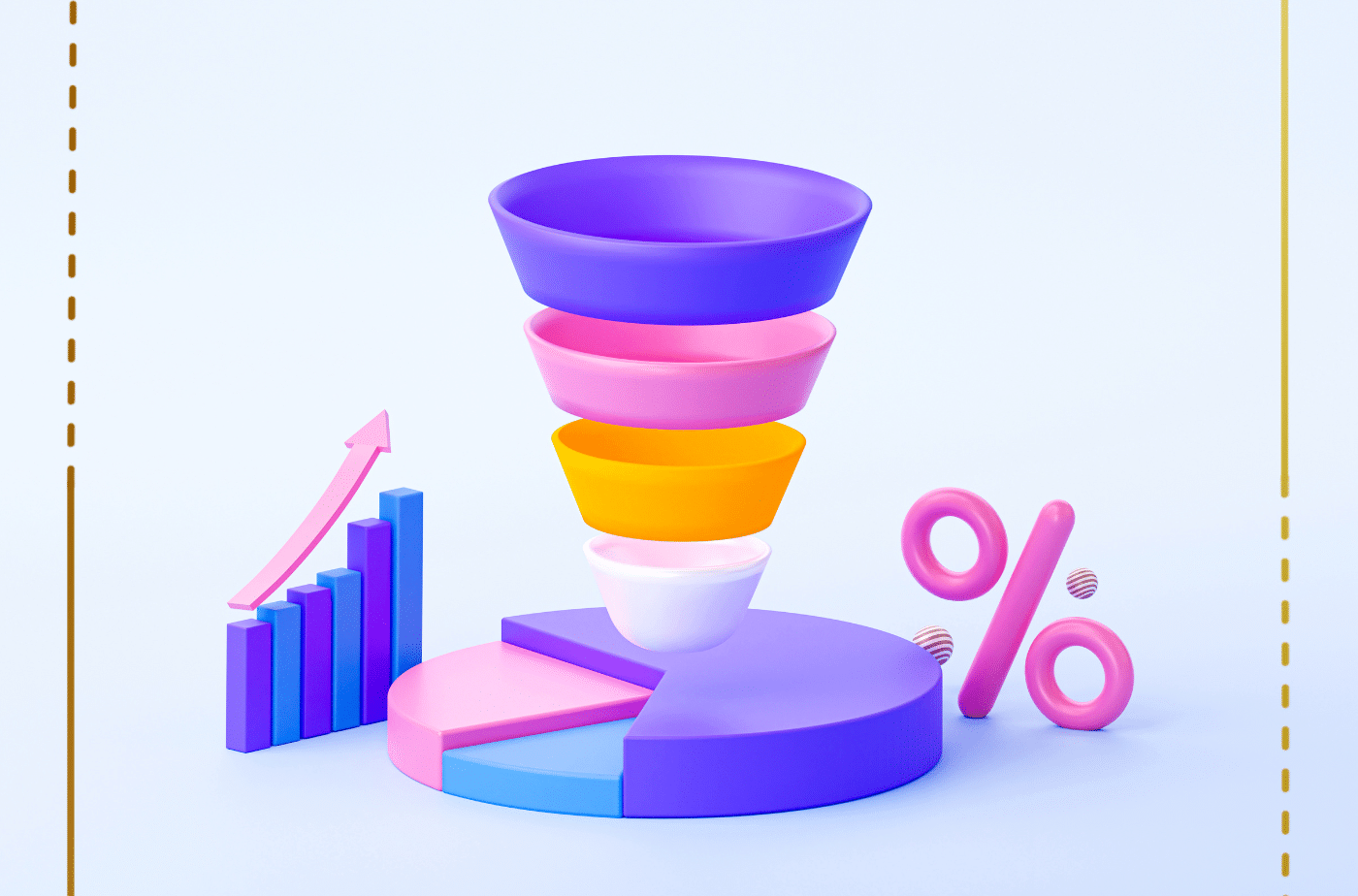
For decades, marketers have relied on the classic sales funnel: awareness at the top, consideration in the middle, and conversion at the bottom. It’s simple, intuitive, and easy to measure. But the way people buy today no longer follows that tidy, downward path.
In reality, the modern buyer’s journey looks less like a funnel and more like a web of interactions—messy, unpredictable, and non-linear. Buyers jump between research, validation, and decision-making across dozens of channels before ever speaking to a salesperson.
The funnel isn’t just outdated. In many cases, it’s actively misleading marketers about how customers actually buy.
Why the Funnel No Longer Reflects Reality
The traditional funnel assumes three things:
Buyers move forward step-by-step
Marketing pushes buyers toward conversion
The purchase decision happens at the end of the journey
None of these assumptions hold true today.
Modern buyers control their own journey. They research independently, consult peers, read reviews, watch videos, join communities, and revisit vendors multiple times before making a decision.
Instead of moving neatly from awareness to purchase, buyers loop, pause, revisit, and compare.
A prospect might:
Discover a product through social media
Ignore it for weeks
Read a review months later
Join a webinar
Compare competitors
Ask peers in Slack or LinkedIn
Revisit pricing pages multiple times
This behavior doesn’t resemble a funnel—it resembles a network of micro-decisions.
The Rise of the Non-Linear Buyer’s Journey
Today’s buyer journey is shaped by three major shifts.
1. Self-Directed Research
Buyers now complete the majority of their research independently before ever speaking to a company.
They consult:
Review platforms
Reddit threads and communities
Analyst reports
YouTube demos
Product documentation
Peer recommendations
Marketing no longer “moves” buyers through stages. Instead, buyers assemble their own understanding from many sources.
2. Channel Fragmentation
Customers encounter brands across a growing number of touchpoints:
LinkedIn posts
Podcasts
Communities
AI search
Organic search
Events
Referrals
Paid ads
Each interaction contributes a small piece of the overall perception of a brand. Conversion rarely happens because of one single moment—it happens because of cumulative trust built across many interactions.
3. Trust Happens Outside the Funnel
In the past, brand messaging drove purchase decisions. Today, buyers trust other buyers more than marketing.
Reviews, communities, and peer networks often carry more weight than traditional marketing assets.
This means influence frequently occurs outside the funnel entirely.
From Funnels to Buying Networks
Rather than thinking about a funnel, modern marketers should think about buying networks.
In a network model:
Buyers enter from multiple points
They move between stages unpredictably
Influence happens across channels
Decision signals appear in many places
The goal of marketing is no longer to push buyers down a funnel—it’s to be present wherever they are learning and evaluating.
That means creating ecosystems of content and trust signals rather than linear nurture sequences.
What This Means for Marketing Teams
If the funnel is dead, what replaces it?
Successful teams are shifting toward three principles.
1. Create Discovery Everywhere
Buyers might discover your brand in unexpected places. Strong marketing now means showing up across the channels where your audience learns.
This includes:
Social content
Community engagement
Educational resources
Thought leadership
Search visibility
The more entry points into your brand ecosystem, the more likely buyers will encounter you during their research.
2. Build Trust Before Capture
Traditional funnel thinking prioritizes lead capture early. But today’s buyers often avoid gated content and sales interactions until they’re ready.
High-performing brands focus first on credibility and education, allowing buyers to explore freely.
Trust accelerates purchase decisions more effectively than aggressive lead capture.
3. Measure Influence, Not Just Conversion
In a non-linear journey, the last touch rarely tells the full story.
Instead of asking, “What drove the conversion?” marketers should ask:
What built trust?
What created momentum?
What signals indicate buyer readiness?
Understanding the full influence ecosystem is more valuable than tracking a single funnel path.
The Future of Customer Journeys
The funnel was designed for a simpler era of marketing—when information was scarce and companies controlled the narrative.
Today, buyers control the narrative.
They research independently, move fluidly across channels, and rely heavily on peer validation. Their journey is dynamic, self-directed, and constantly evolving.
The brands that succeed in this environment won’t be the ones that optimize the funnel.
They’ll be the ones that understand the network of influence surrounding modern buyers—and build trust within it.
The funnel may have defined marketing for decades.
But the future belongs to marketers who embrace the complex, non-linear reality of how people actually buy.