Marketing teams have never had more data. The problem is rarely a shortage of numbers. It’s the gap between the flood of impressions, clicks, sessions, and spend and the small set of decisions that actually move a business forward. Artificial intelligence is closing that gap, but only for the marketers who use it deliberately.
At Zozimus, we spend a lot of our week living inside analytics platforms across healthcare, medical device, manufacturing, and consumer accounts. What follows are five tips we’ve found genuinely change how performance tracking works when AI is part of the process, along with a few honest notes on where it still needs a human hand.
1. Clean and unify your data before AI ever touches it
AI is only as good as the data underneath it. Feed a model fragmented, inconsistent numbers pulled from six different platforms and you’ll get confident, well-formatted, wrong answers. That’s the fastest way to lose trust in the whole approach.
Before you automate anything, get your sources into one place with consistent naming, date ranges, and metric definitions. What counts as an “impression” on one platform is not always what counts on another, and paid versus organic bases can quietly distort every number downstream. Sorting that out first is unglamorous work, but it’s the foundation everything else sits on.
This is exactly the kind of infrastructure work Zozimus handles for clients. We pull unified performance data across Facebook, Instagram, LinkedIn, YouTube, and paid campaigns into a single reporting layer, which means the AI-assisted analysis on top of it is working from one clean version of the truth rather than a pile of exports that don’t reconcile.
2. Use AI to catch what you'd otherwise miss
Most marketers still find out about a performance problem days after it starts, usually when someone happens to open a dashboard. AI flips that. Anomaly detection can watch your key metrics continuously and flag when something breaks pattern, a sudden drop in a campaign’s click-through rate, an unexpected spike in cost per result, a piece of content quietly outperforming everything around it.
The value here isn’t the alert itself. It’s the time you get back. Instead of manually scanning reports looking for trouble, your team gets pointed straight at the handful of things that need attention this week. That’s especially useful when you’re managing many accounts or channels at once and no single person can watch all of them closely.
A practical starting point: pick three or four metrics that genuinely predict success for each campaign and set AI-driven alerts on those, rather than trying to monitor everything. Precision beats coverage.
3. Move from "what happened" to "what's about to happen"
Traditional reporting is a rear-view mirror. It tells you last month’s story after it’s already written. The bigger opportunity with AI is predictive, using historical patterns to forecast where a campaign is heading while you can still influence the outcome.
Predictive models can estimate which audience segments are most likely to convert, project how a piece of content will perform based on how similar content behaved, and forecast pacing so you know mid-flight whether a campaign will hit its target or fall short. That turns performance tracking from a monthly autopsy into an ongoing steering system.
We’ve leaned on this thinking heavily in our own work, including a fair amount of writing and client strategy on predictive marketing. The pattern that holds up across accounts is simple: teams that forecast and adjust in-flight consistently outperform teams that wait for the end-of-month report to react.
4. Let AI solve attribution in a cookieless world
Attribution has always been messy, and the ongoing collapse of third-party cookies has made it messier. Marketers are left trying to understand which touchpoints actually drove a result with less deterministic tracking than they had a few years ago.
This is where AI earns its place. Modeled and probabilistic attribution can estimate the contribution of each channel and touchpoint even when you can’t follow an individual user cleanly from first click to conversion. Rather than defaulting to last-click, which overcredits whatever happened to be last in line, AI-assisted models distribute credit across the full path in a way that reflects how buying decisions actually happen.
Cookieless attribution is a topic we’ve dug into deeply at Zozimus, because it directly affects how confidently a client can decide where to put their next dollar. The goal isn’t perfect measurement, which no longer exists. It’s a defensible, consistent model that lets you compare channels fairly and reallocate budget with reasoning behind it.
5. Use AI to turn data into a decision, not just a chart
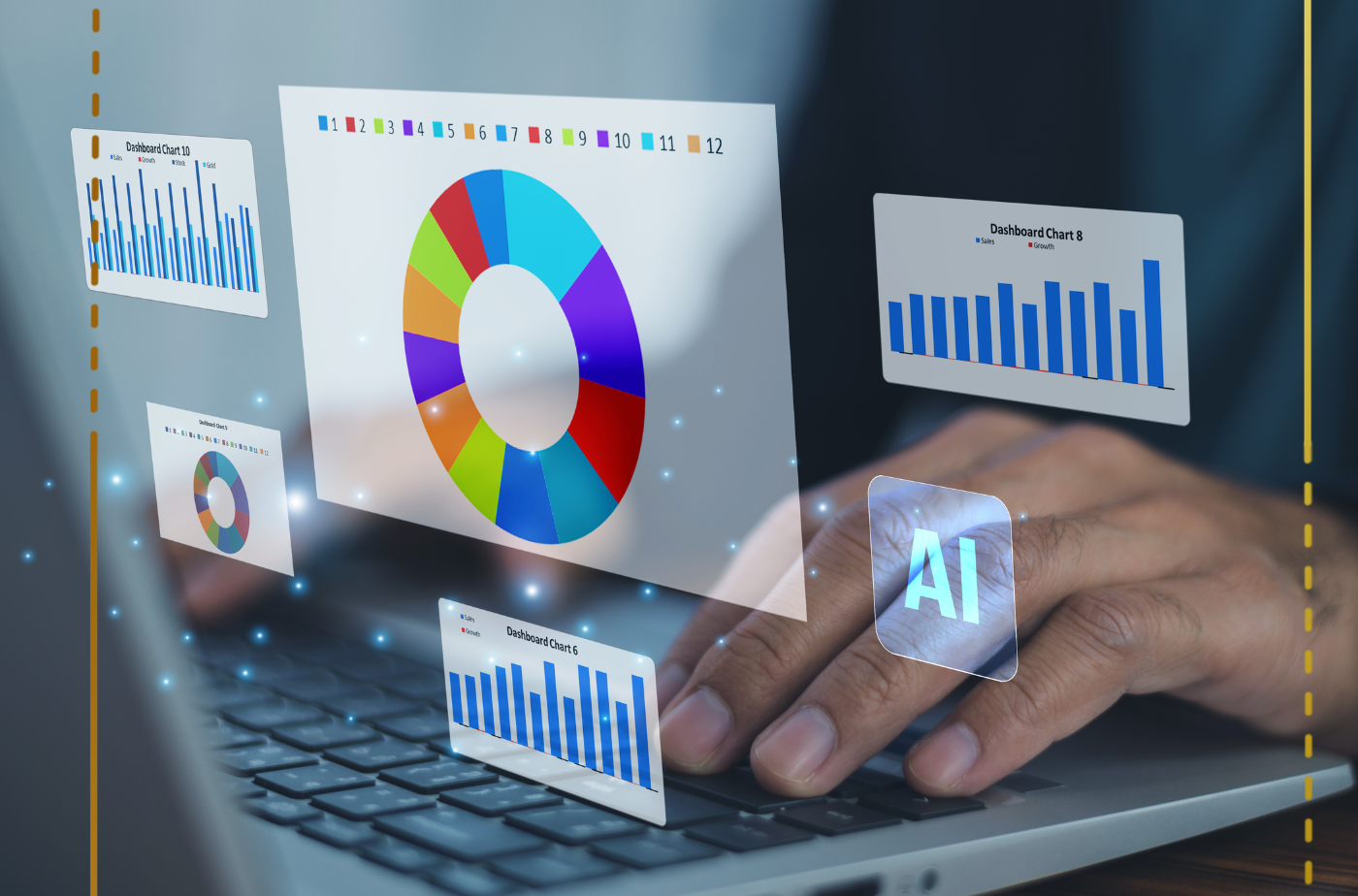
Here’s the tip that gets overlooked most. The hardest part of performance tracking isn’t producing the numbers. It’s translating them into a clear “so what” that a client or a leadership team can act on. A dashboard with forty metrics informs no one.
AI is genuinely good at this synthesis step. It can summarize a month of performance into plain language, surface the two or three findings that matter, and draft the narrative that accompanies a report. Used well, it takes the analyst out of the copy-paste-and-caption grind and lets them spend their time on judgment: deciding what the numbers mean and what the client should do next.
That said, this is the tip that most needs a human editor. AI will happily state a trend as a cause, miss the context behind a spike, or smooth over a nuance that changes the recommendation entirely. The workflow that works is AI for the first draft and the pattern-spotting, a person for the interpretation and the accountability. At Zozimus, that’s how we build reporting for regulated clients in particular, where a benefit claim or a compliance detail can’t be left to a model’s best guess.
The through-line
None of these tips are really about the technology. They’re about spending less time assembling numbers and more time deciding what to do with them. AI handles the unification, the monitoring, the forecasting, and the first-draft synthesis. Your team handles the judgment, the context, and the strategy that a model can’t own.
That balance, automation underneath and human judgment on top, is how we approach performance tracking for every account we manage. If your team is drowning in dashboards but still short on answers, that’s usually the gap worth closing first.
Zozimus is a Boston-based independent PR and digital marketing agency. If you’d like to talk through what AI-assisted performance tracking could look like for your brand, we’d be glad to have the conversation.